
Hi Elliott.
I’m very honoured that you have agreed to be interviewed on the site. I would like to thank you, as it is indeed a privilege to interview someone of your stature.
Elliott’s Bio
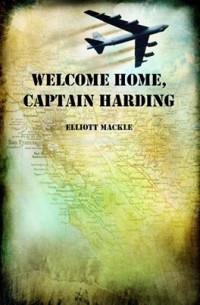
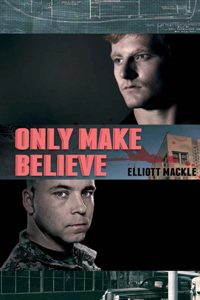
Elliott Mackle’s fifth novel, Only Make Believe, a sequel to Lambda Award finalist It Takes Two (2003), was named Best Gay Mystery / Thriller of 2012 in the international Rainbow Awards competition. Both chart the adventures of a pair of crime-solving veterans in post-World War II Florida. Mackle served four years in the United States Air Force during the Vietnam era, achieving the rank of captain. He was stationed in California, Italy and Libya, the latter the setting for Captain Harding and His  Men (2012) and the multiple-award-winning Captain Harding’s Six-Day War (2011). Welcome Home, Captain Harding (2013) completes the Joe Harding trilogy.
Hot off the Presses (2010), a romantic exposé of the racial and sexual politics surrounding the 1996 Centennial Olympic Games, is based in part on Mackle’s decade as a writer for the Atlanta Journal-Constitution. He has written for Travel & Leisure, Food & Wine, Los Angeles Times, Florida Historical Quarterly, Atlanta and Charleston magazines and wrote and produced segments for Nathalie Dupree’s popular television series, New Southern Cooking. Along the way, he managed a horse farm, served as a child nutrition advocate for the State of Georgia, volunteered at an AIDS shelter, was founding co-chair of Emory University’s GLBT alumni association and taught critical and editorial writing at Georgia State University.
Before I start the interview, what would you like your fans to know about you? 😀
That I’m a hell of a nice guy, generous to my friends, good to my dogs and a serious workaholic.
You have had several careers over the course of your life and I’m wondering which one was the most satisfying to you. I know it’s hard to choose among such distinguished assignments as a lead reporter for the Atlanta Journal-Constitution covering the 1996 Olympic Games, a newspaper columnist, and the United States Air Force, but maybe you could try to capture for us which career was pivotal for you.
 Definitely the Air Force. Like most of my Moon-over-Miami friends I had few real responsibilities or duties growing up. I coasted through college on brains and my developing talent for writing, public speaking and working the room. Then I was drafted. Unwilling to slog through Vietnam as a grunt, I talked my way into Air Force Officers’ Training School, earned a commission and, as a very green second lieutenant, was assigned to lead the food service squadron at a Strategic Air Command base on the other side of the country. Suddenly, and at least legally, I held the power of life and death over 200 men. Luckily I also had the assistance of a top-flight first sergeant, a fatherly base commander and a well-trained cadre of mess sergeants. Still, I had to grow up fast.
This was pre-Don’t Ask, Don’t Tell. Were you out?
More or less. Some people knew or guessed. I was single and didn’t date women. But so were a lot of bachelor officers. We were young twenty-somethings and most planned to marry after they finished their tour. Add to that, the Air Force was the newest, most modern and least tradition-bound service. People knocked on doors. They didn’t ask personal questions. One of my men essentially came on to me during clean-up for a barracks inspection. I told him to put on his pants and get back to work. He got the message. But later, another of my men put his hand in his buddy’s pocket when both were drunk. He got bounced.
How much of yourself is in your protagonists?
 Hard to say. Some of the situations in which I place Joe Harding echo my own experience. A gay airman who worked for me was killed by fag bashers and, like Joe, I had to go through his personal effects and deal with the Air Force secret police. Joe’s affair with the medic is something like a brief affair at Wheelus; a friendship with a much younger man never went as far as Joe’s and Cotton’s consummations; the model for Sam, as far as I know, was heterosexual – though by accident (I forgot to knock!) I do know what he looked like naked and aroused. :blush: The Caloosa Hotel and Club is a patchwork of the naughty delights available in post-war Florida for those who could afford them. (I studied Florida history in grad school.) 😀 Dan Ewing’s hospitality experience is based on my four years’ service as a food service officer and my background as the son of a man who owned hotels and restaurants. Bud Wright (I’ve said this before) is my attempt to construct a happier life for a man I deeply loved who destroyed himself with drugs and internalized homophobia.
Still, some aspects of Joe’s adventures were suggested by the career of a gay friend who was decorated for valor over Vietnam, put in his 20 and retired after flying super-secret missions. Did his commander know the whole story? Enough. Was he forced to resign? No, his skills as a pilot were too valuable to throw away.
Many fans have talked about the potential for some of your books to be made into movies as they are so exciting and full of intrigue and danger. You also mentioned before that you were considering expanding your writing to include screenplays. Is there anything new on this front?
Unfortunately, no. Getting the attention of movie stars and producers is almost impossible for an outsider. Lightning might still strike.
Tell us something about yourself that might surprise us.
I breed and handle miniature schnauzers. I am currently showing a bitch called Sugar. In August, she and I  completed the requirements for her AKC grand championship, no easy task. Last December, at the AKC/Eukanuba national championship show in Orlando, she was judged “select” bitch, meaning second best female in the breed. A bunch of professional handlers were looking at my back when I picked up our ribbon.
According to what I’ve read, you have been writing since you were 14 and while a lot of us dream of writing “the great American novel” or in my case “the great Canadian novel” since I’m Canadian, I’m interested to know why you didn’t lose the writing bug like most of us?
Mentors, readers and editors liked what I came up with, asked for more and helped me learn how to do it. My composition teacher at Vanderbilt coached me into winning the freshman writing prize. Moving to University of Miami, another wise mentor helped me keep my head above water in his professional writers’ workshop. An Air Force colonel asked me to write a news column for the base newspaper. A professor at Emory told me my writing was “too chatty” for academe – but therefore well suited to journalism and fiction, as things turned out. After that, news and magazine editors hired me and I eventually hired a book doctor to work on what became It Takes Two.
Your careers in the Air Force and as a reporter obviously influenced your writing, and I know most writers stick to writing what they know. Did you ever consider using a completely different background for your novels?
Do you mean like trying to imagine what it’s like to be a rent boy in New Orleans or an ad-agency rep on Madison Avenue who dates transgender vampires? No, never. Closest call: An Atlanta-based version of Tales of the City went nowhere and I put it away.
1996 was a turbulent time in Atlanta and you used it as a backdrop for your novel Hot off the Presses which seems to have captured the heart and soul of that period in American history. What made you base the book on that time period, outside of the fact that you lived it?
The 1996 Centennial Olympic Games, for various reasons, was a disaster for Atlanta. I thought the causes and background needed to be examined through the eyes of a reporter who covered the event, who saw how the sausage is made, and that people would read it. Turns out not. It’s my least popular novel. Nobody wants to mention the games, much less face the mistakes that were made. There are also two major HIV strands in the book. The buyer for a major chain told me that that alone killed it, that he couldn’t give it away. Me? I like the book, am proud of it, sorry it made so little impression.
You said in a comment on this site on the review of Only Make Believe when asked if there was hope for Dan’s and Bud’s relationship, considering the era, “Rest assured, you haven’t seen the last of Dan and Bud  yet.” So the obvious question is: are you currently writing another Dan and Bud novel and if so, when can the fans expect to have it in their hot little hands?
A good bit of a novel tentatively called Sunset Island is drafted. The action occurs between the narratives of It Takes Two and Only Make Believe, so it’s tricky. Personal matters during the summer (three close friends died quite awful deaths) forced me to break off. There may be a novel in home hospice care and lung cancer but probably not for me. I hope to get back to it fairly soon – my publisher is breathing down my neck. If all goes well, readers should have it around this time next year.
I usually ask readers to submit questions for the interviewees and here are a couple for you:
From Sirius: When I was reading the second book in the Captain Harding series I was on one hand pleasantly surprised as a romance lover because I thought that the books took a more romantic turn. However I was also wondering whether this was your initial plan, to take the books in a more romantic direction? It is not that the romance felt forced, but in the first book his romance life felt much grittier, if that makes sense?
Yes, it does, because Joe’s earlier affair was with a much older graduate student at Vanderbilt. In that  relationship he was the eromenos, or youth. With Cotton, he must become the erastes – the older, dominant partner – and the path isn’t always easy. There’s a good bit of romantic balance in the second book. In the third, though I don’t emphasize the point, Cotton is becoming the leader of the pack.
That said, none of my novels are intended as strictly romances, mysteries, thrillers or comedies of manners. My hope is that they come off as a bit of each. There’s been a good deal of comment on this, pro and con. Steve Berman, my publisher, has said, in effect, that if Elliott were writing conventional mainstream heterosexual narratives, no one would try to pigeonhole him into one genre or another. I’ll go with that.
Gaycrow, another fan, has a comment and a question: I’ve just finished reading Welcome Home, Captain Harding and am sad to think this is the last we’ll see of Joe. But all good things come to an end I suppose. I’d like to ask Elliott how he feels about saying goodbye to Joe, and also, what is in the pipeline?
Wave asked the same question:
Now that you have retired Captain Harding, how difficult was it for you, emotionally and professionally as a writer, to accept that although your characters will live on in your books there would be no new adventures when you wrote “The End,” to Welcome Home, Captain Harding?
To my mind, Joe, Cotton and Sam are living their lives without me looking over their shoulders. Several readers have suggested picking up their story 20 or 30 years later. That’s not a bad idea but one I’m not going to chew on right now.
Gaycrow has another observation: I was interested that Elliott mentions The God in Flight by Laura Argiri  as being one of the works that influenced the creation of Welcome Home, Captain Harding. That’s one of my favourite gay fiction books, but it isn’t talked about very often, so it was a pleasure to see it crop up in the author’s afterword.
The God in Flight ought to be on every GLBT writer’s shelf. The happy frenzy of the lovers toward the end, contrasted to the smug meanness of the theology school divines, suggested the path I followed in wrapping up the last chapters of Welcome Home. Frankly, Flight is a difficult read for anyone unfamiliar with the process of creativity, the making of art and the insular world of academe. As it happens, I have some familiarity with all of these. And as it also happens, too many of today’s writers and readers are willing to settle for simpler characters, plots and stories than Flight’s or the books I mention in the next section. Not I. Nor, I gather, the majority of my readers.
NOTE: Thanks to Lady M for submitting a few questions which have been expanded and incorporated with some of mine because they were so GREAT.
Because I read a lot I always try to get ideas of books to read from the people I interview. Do you have favourite books and stories that you would like to recommend to readers other than the usual suspects you mentioned in other interviews such as: GWTW, “Brokeback Mountain,” The Leopard, From Here to Eternity, The Charioteer, L.A. Confidential and Wingmen? Maybe there’s a second tier of lesser known books on your M/M bookshelf? If so, what is it about these books that make them memorable or useful for you? Other than  your own books, 😀 are there other books in the M/M genre that stand out?
Yes, a bunch, all books I’ve read at least twice and learned from. The Gallery (1947), John Horne Burns’ linked stories set in post-war Naples, was a very early toe in American mainstream m/m waters. Christopher Bram’s Almost History (1992), in which a minor foreign-service officer encounters powerful public figures (Imelda Marcos, Richard Nixon), gave me the template for creating the ongoing dialog between the relatively unimportant Captain Joe Harding and the fiercely ambitious mandarin-diplomat, Elizabeth Boardman. Jane Hamilton’s The Short History of a Prince (1998) tells the story of a young man who fails as a dancer and fails to win the heart of his best friend, yet finally finds his place in the world. The book speaks to my own history and surely informs the conclusion of Welcome Home, Captain Harding.
Most of my main characters are athletic and physically active. I don’t know that H. M. van den Brink’s On the Water (1998) had any influence on the Mackle stable of jocks but it’s little known and I highly recommend it. Set in Amsterdam before and during World War II, van den Brink’s story of two young oarsmen and their coach seamlessly blends the relentless teamwork of sport, haunting memories of pre-war happiness and spare, lyrical writing. Michael Jensen’s Frontiers (1999), like Brokeback, imagines and explores the sexual freedom, violence and interdependence of the pioneering men who opened the West. Today’s historical novelist must imagine what surely happened, not what the conventional texts, dime novels and Hollywood fantasies assure us is true. Finally, Alex Beecroft’s rollicking, bawdy False Colors (2009) puts a highly convincing m/m spin on age-of-sail sagas such as the sexually claustrophobic novels of Patrick O’Brian. Alex may not be the first novelist to use the word “mast” for phallus but the novel is packed with delicious wit, entertaining embarrassments and convincing historical scene-setting and detail.
 In your illustrious careers, what was the best of times and what was a defining moment for you?
The defining moment? Somewhere around 1985, a drinking buddy who happened to be editor of Creative Loafing, then the South’s leading alternative newsweekly, offered me a weekly anything-goes food column. The pay was something like $30-$45 per column. I was out of a job. I stayed up all night, visualizing yes and visualizing no. Finally, my partner said, “Do what you want to do but stop tossing and turning.” We called the column Grazing. When I left the Loaf for the AJC reviewing gig my editor-buddy took it over. It ran until a couple of years ago.
The best of times? Probably my election to the James Beard Foundation’s restaurant awards committee. We met in New York three times a year to oversee the selection of the nation’s top restaurateurs, chefs, bakers and winemakers by their peers and the press. During my time on the board I backed four Southern chefs. All received their Best-of Beard awards.
What is the biggest misconception about you?
Heaven knows. My partner suspects I’ve experienced all my characters’ sexual adventures. Don’t I wish.
Can you tell us what your plans are for future books (other than the third Dan and Bud?) Do you have anything you’re working on that we can look forward to in the immediate future?
After the next Dan and Bud, I plan to pick up the pieces of a memoir of growing up in the fast lane in 1950s Miami. My father was a successful businessman with political connections. I was a spoiled brat who showed horses and escorted debs to balls. The parents of some of my classmates in Catholic school were Mafia dons, loan sharks and retired Caribbean dictators. The parents of other friends had their last names on company buildings. Many of us were having sex but none of us talked about it – or about anything important. At least half are now dead. It was a wild ride.
Given your profile do you see yourself as having a role in the ongoing fight for GBLT rights in the US?
My marching days are behind me, ditto street protests and sit-ins. To my mind, young or old, however, being  out and out there is of utmost importance. Anyone who meets me more than casually will never again be able to say that he or she doesn’t know anyone gay. The same was true when I was hired by the AJC. My principal assignment was to write about a wide range of restaurants, and secondarily about new food products, cookbooks, travel and military affairs. I was not hired to write about being gay or having a male partner. Occasionally I touched on such topics when they were essential to reporting the story. I handled this in two ways. Rather than let anyone think he or she could blackmail me for a good review, I let it be known in the restaurant industry that I volunteered on the gay helpline and at Jerusalem House (Atlanta’s AIDS shelter), that I did not discriminate in reviewing gay-owned businesses (pro or con) and that I belonged to several all-male organizations. Beyond that, like many writers, I created an imaginary cast of readers who I hoped would be affected by my work. Among them, a 15-year-old boy, unsure of his sexuality, who needed to know that a man can be strong, tough, gentle, funny, smart, a published writer – and gay.
Is there a question that I didn’t ask and if so, what is it and what is the answer? 😆
You didn’t ask if a career built on long hours and low pay was satisfying, worth doing, or if I harbor any doubts. Or if I had second thoughts about giving up an editorial position of considerable power at a major daily and eventually turning to small-press, semi-genre fiction that makes some, probably most of my relatives blush.
A colleague once remarked that becoming a restaurant critic is like being put out to stud. You take something you love and turn it into work. While that’s true, it’s also true that pedigreed stallions get a lot more and better sex than birthday-party ponies. I started traveling as a kid. My family enjoyed and could afford fine dining, Broadway shows and luxury hotels. A college-sponsored tour of the Middle East followed by three service years in California (with weekends in San Francisco) and then assignments in North Africa and Europe cemented my taste for travel.
I was a pre-World War II baby. All of my early memories are tied to the war. My father was a Navy contractor in Key West and two uncles served in the Seabees. The first “grown-ups” book to catch my fancy was Captain Ted W. Lawson’s Thirty Seconds Over Tokyo, a propaganda effort that was turned into a hit film starring Van Johnson, my first love (Johnson is partly the physical model for Dan Ewing).
Writing food and travel stories has provided opportunities to visit Pacific battlegrounds (Truk, Peliliu, Guadalcanal), memorials (Punchbowl Cemetery, Pearl Harbor), romantic settings (Waikiki’s Moana Hotel) – at least partly on somebody else’s nickel. (Without these on-site inspections there might be no Dan and Bud.) 😮 When I was on leave, I traded time and expense money for extra stories. An interview with a hot chef in Honolulu or New Orleans, for instance, was worth an extra day away.
I visited a health spa, took cooking lessons and wrote about restaurants, street food and historic sites in Mexico for the AJC. The LA Times sent me to Charleston, South Carolina, the Sonoma County wine country, Ocala National Forest in Florida and the Okefenokee Swamp here in Georgia. Well before the World Trade Center was destroyed by terrorist thugs as I watched, horrified and transfixed, on CNN, I’d described lunch at Windows on the World for my Atlanta readers. I studied Thai cuisine in Bangkok in 1990, just as the craze for Thai restaurants was heating up nationwide. I was a judge at the 1989 National Rib Cookoff …
I wouldn’t trade my life and career for anyone else’s in all the world.
Thanks for your time Elliott. This interview met and exceeded my expectations. 😎
************
Elliott Mackle’s Contact Information




Thank you Wave and Elliott for a very enjoyable interview.
I was sorry to read of the passing of three of your close friends, Elliott. I can see how that would put a halt to your writing; the grieving process can be very unsettling in normal circumstances, let alone those you describe. I’ll patiently wait for the release of “Sunset Island”. In the meantime, I’ll try and find the stories you mentioned that you learned from.
I’m a big fan. Thanks to Wave & Mr. Mackle for the interview! I look forward to spending more time with Dan & Bud next year.
Love, love, love the Capt Harding novels. I too imagine those three guys living and loving somewhere out there.